
TWO PLACES AT ONCE
CLASS SYSTEM

Pompeii had an extremely paramount class system in which their daily lives depended on but there was possibility of fights between two classes. The reason for this was that there was an extremely huge gap between the upper classed and lower classed Romans in Pompeii.

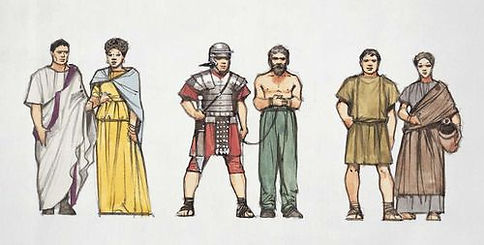
Upper Class
Senatorial Class (Senatores):
This class was dependent on politics, and consisted of men who served in the Senate. However, to become a senatore a man must have evidence of owning 1,000,000 sesterces. To earn noble status and become nobles (class that dominated senatores), a man must be elected as a consul and then would have accomplished nobility for his family. This man is known as a “new man” (novus homo).
Equestrian Class (Equites):
This class is distinguished as economic in modern terms. A man could easily become an equestrian if he owned a minimum of 400,000 sesterces property, if the man were to have obligated to this, his whole family would also become equestrians. Nevertheless, an equestrian could become a senatore but this did not occur very frequently and was uncommon.
Women
Women were quite difficult to classify and was then considered to be classified by a male in their family. Their social status would first be of their fathers, then husband.


Lower Class
Commons (Plebs or Vulgus):
Commons included all Roman citizens who signed a contract of the right to a legal marriage to another Roman citizen and would then give birth to children who were also classified as Roman citizens.
Latins (Latini):
These Romans were former slaved who had been unceremoniously released by Roman citizens.
Foreigners (Peregrine):
People who lived in Roman territories but who were not Roman were considered as foreigners. However, foreigners could be permitted Roman citizenship.
Freed people: (Liberti or Libertini):
Men and women who were once slaves but have been bought to be released are recognized as freed people. However, this does not necessarily mean they have been fully released. These people are additionally poor but their children are born as a Roman citizen and could even be accountable for an equestrian if the child is wealthy enough.
Slaves (Servi):
Slaves could either be born into slavery or sold. Slaves were regarded as the property of their masters but are allowed to collect money in order to buy themselves out of slavery.
Women:
Lower class women were not classified by a male so they followed the lower classed social status system. However, if one’s parents were Roman citizens who signed the contract of legal marriage, the female child would follow the status of their family. With Latins, foreigners and slaves, a female child would take the class of their mother instead of their father.


